How AI is Changing Coral Conservation
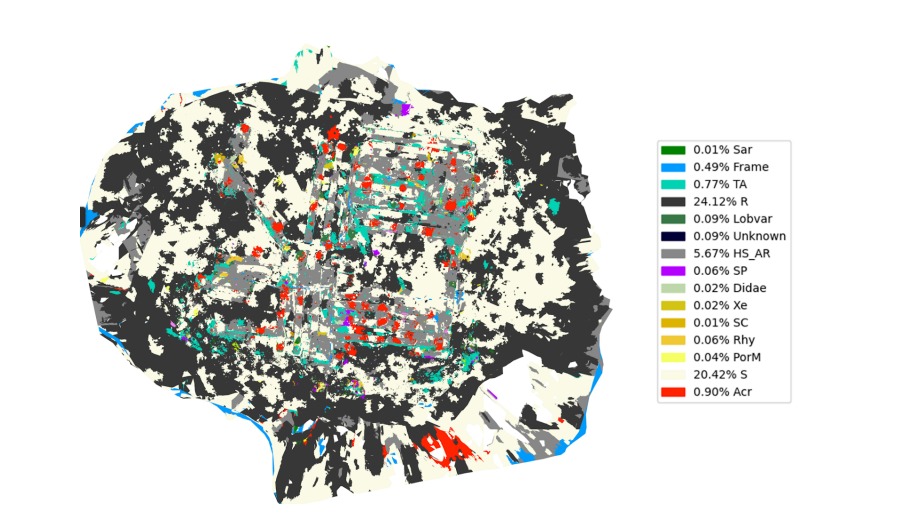
Together with the Accenture Foundation, we have launched a pioneering AI initiative that is transforming how we monitor and conserve coral reefs. By automating species identification and reef monitoring, this technology enables us to act faster, more efficiently, and with greater precision to ensure the health of both natural and artificial reefs in our restoration areas. Traditional monitoring methods are slow, labor-intensive, and prone to human error, making it difficult to respond quickly to changes in reef health, but our AI model changes this. By combining machine learning with high-resolution 3D modeling, we can now identify coral species and track their health at scale, providing the insights we need to guide effective restoration efforts.
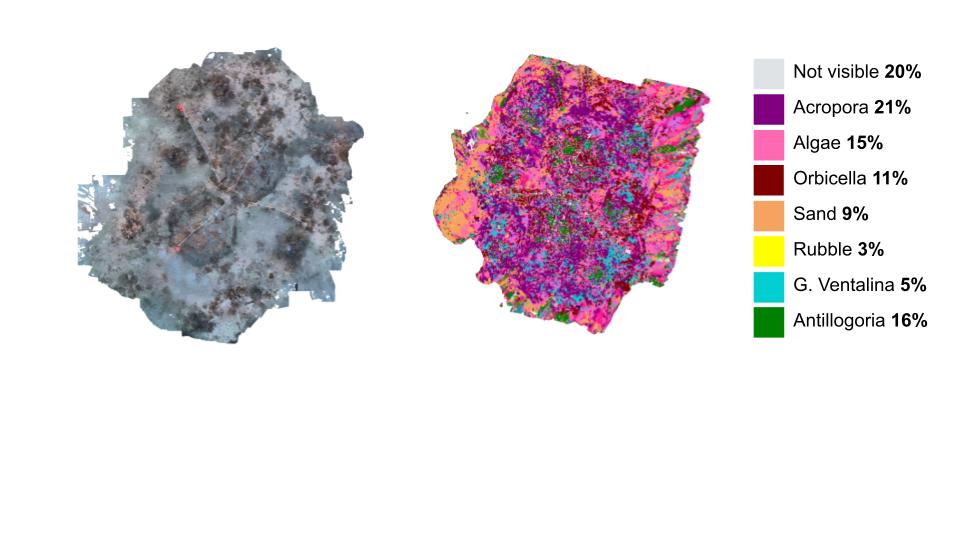
3D Model and species Identification of a natural reef
How it works
The AI system follows a clear process to transform raw underwater images into valuable data for reef restoration, beginning with divers capturing reef images using simple underwater cameras. These images are segmented with machine learning techniques to identify and classify coral structures using the freeware CoralNet, then stitched together to produce detailed 2D orthomosaics or immersive 3D models of the reef environment. The high-resolution digital models also create permanent visual records, reducing observer bias and allowing restoration teams to track changes over time with unprecedented clarity. Currently, the model can recognize 12 benthic categories with good (>70%) accuracy, including commonly-used coral genera for restoration such as the branching Acropora. We are currently continuing the training of the machine learning model to expand the diversity and accuracy of benthic categories recognized, ultimately aiming for recognition of a hundred categories (including 50 coral genera) with an accuracy of at least 80%. In addition, we are expanding the model to enable measurements of coral growth and health over time.
Why it matters
By accelerating and improving the accuracy of monitoring, the AI model enables teams to target restoration efforts where they are most needed. As we continue to develop the model, its impact will grow, helping to protect more reefs, guide restoration planning, and support the communities that depend on healthy oceans for generations to come.
You might also like…


How we take action
The reefolution
blueprint

reef rangers
REEFolution offers a 3-month REEF Ranger program which is aimed to provide practical diving and coral restoration skills to local community members.
Read morereef rangers
coral restoration
Our REEF Rangers actively restore coral reefs using a variety of different science-based methods.
Read morecoral restoration
education
Our REEF Rangers visit local primary and secondary schools to provide marine animal ecology classes aimed to increase local awareness.
Read moreeducation
science
Our REEF Rangers collaborate with international scientists aimed to investigate new coral restoration methods
Read more